Hidden Capacity
Underused instruments, constrained workflows, and lost utilization remain difficult to see.

Underused instruments, constrained workflows, and lost utilization remain difficult to see.
Staffing and capital choices are made after demand has already created pressure.
Manual handoffs, rework, and duplicate effort accumulate between tools and teams.
Operational and quality risks become visible only after they affect performance.
Four outcomes connect operating data to the decisions that determine throughput, growth, quality, and economics.
Recover capacity. Eliminate bottlenecks. Reduce manual work and rework. Increase throughput from existing infrastructure.
Grow volume without proportional increases in overhead, complexity, or errors. See constraints before they limit growth.
Identify risks early. Strengthen quality, compliance, calibration visibility, data integrity, and audit readiness.
Forecast what is coming. Model how critical decisions will affect operating, financial, workforce, and risk performance.

Traditional laboratory systems record and report. SciOne diagnoses, forecasts, and models.

SciOne understands the operational relationships between instruments, samples, methods, assays, recipes, workflows, calibration, quality, and the people who execute the work.
Equipment intelligence in action
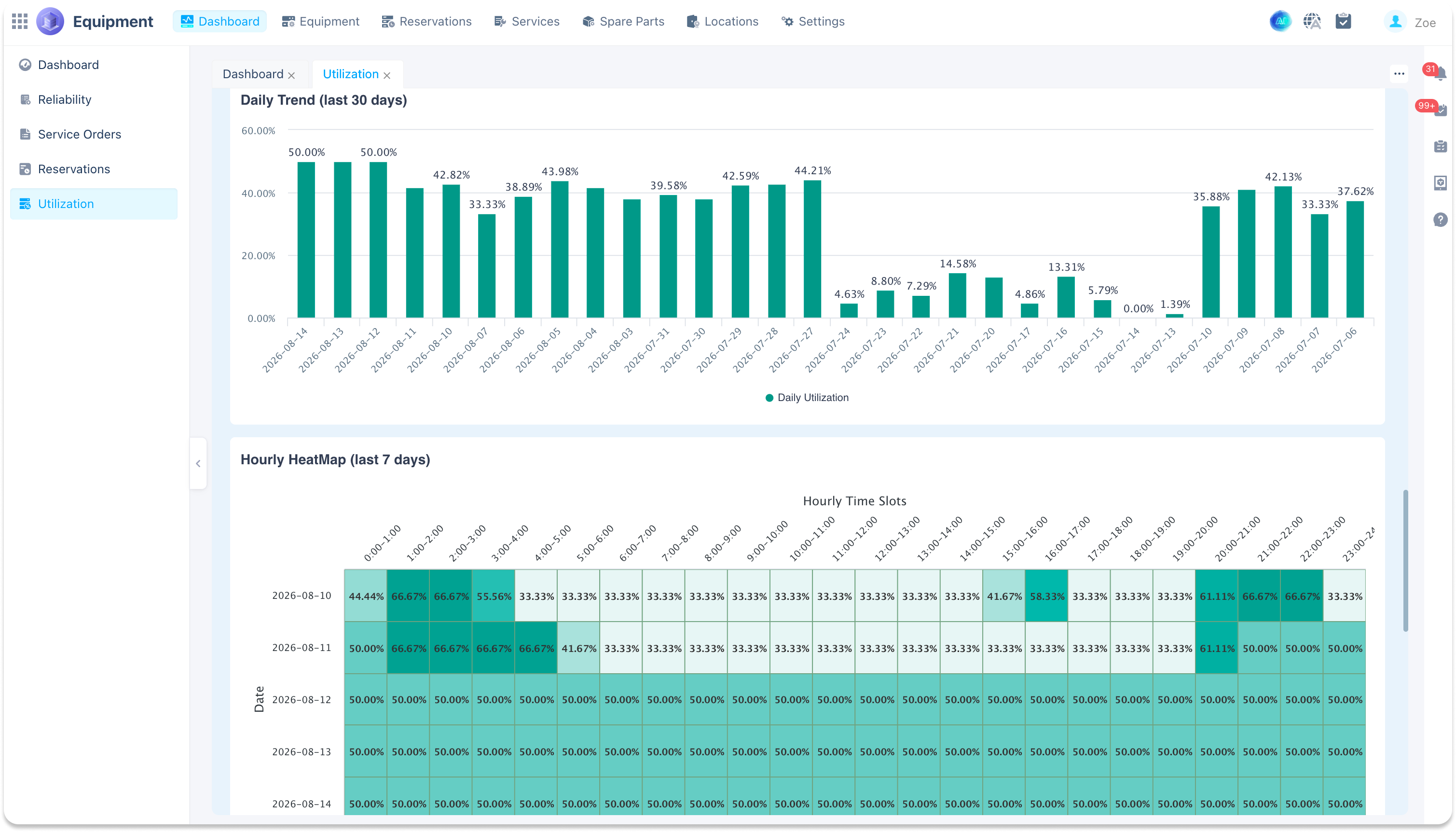
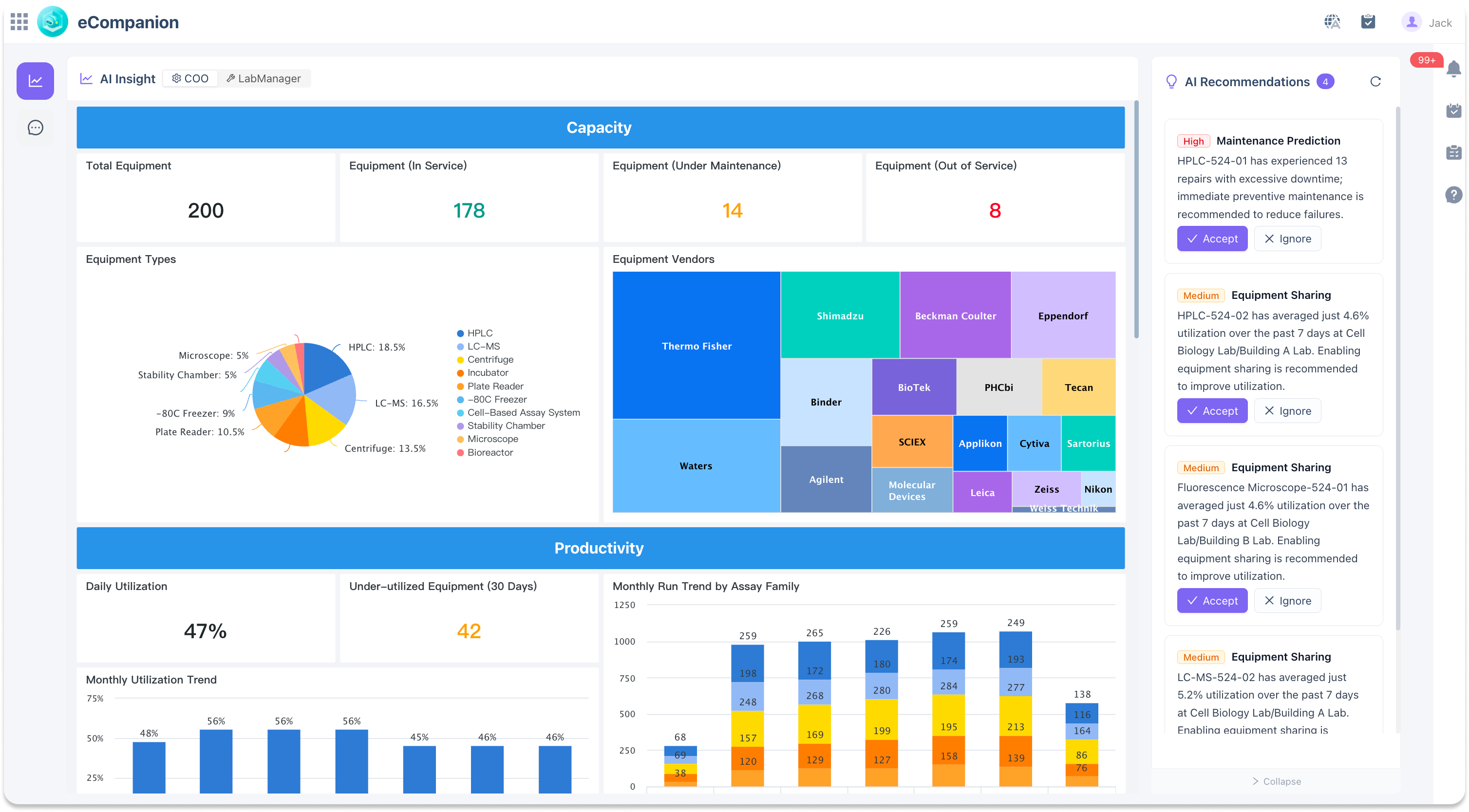
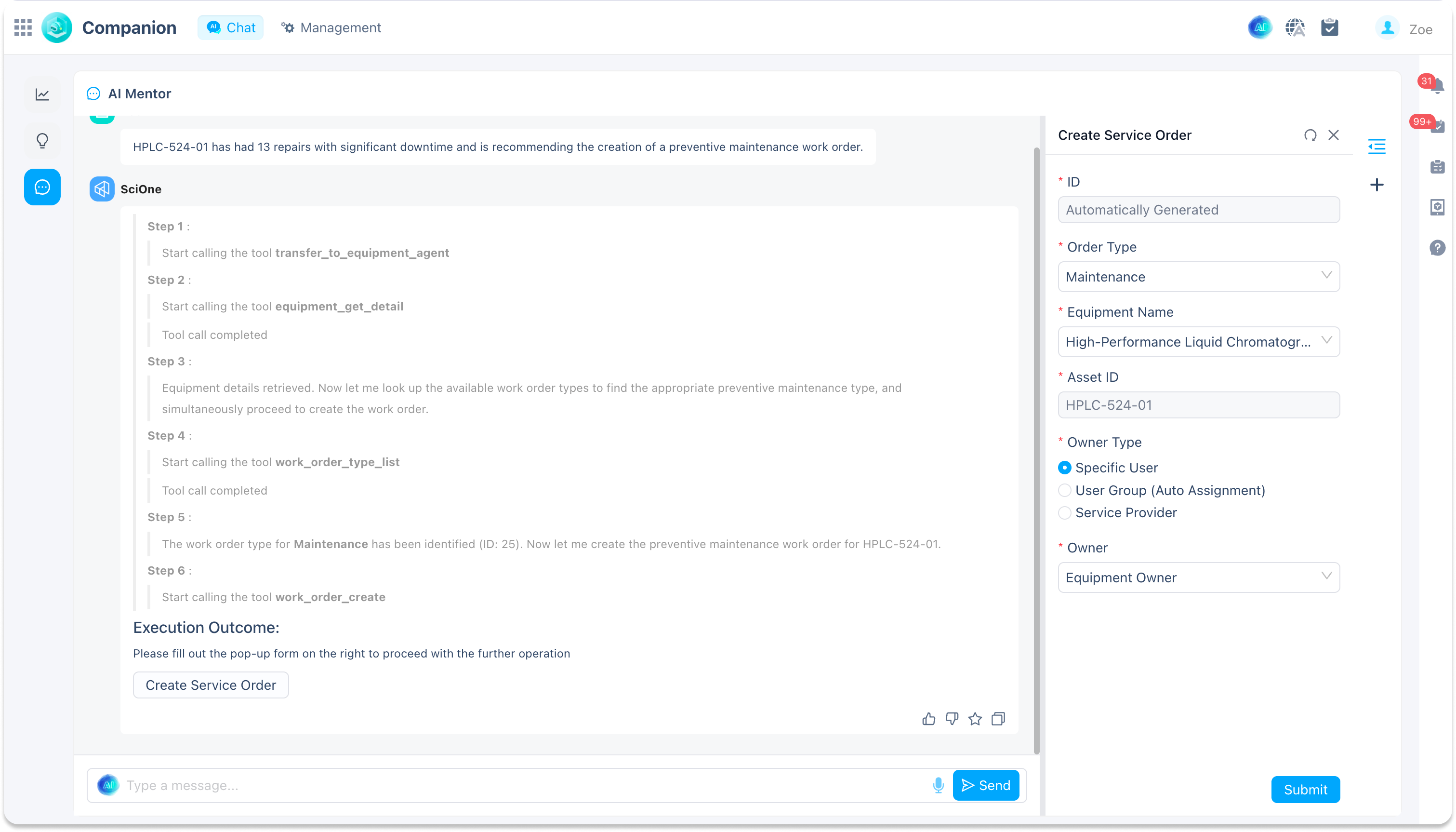
SciOne generates intelligence from your laboratory's own data and scientific context. Outputs are traceable to the records and assumptions supporting them, so leadership, quality, and operations teams see not only the answer, but the evidence behind it.
Diagnosis, forecasts, and models are grounded in the laboratory's operating records and context.
Outputs connect to the records and assumptions supporting them.
Data and model access can be aligned to customer governance and role requirements.
Leadership, operations, and quality teams can inspect how an answer was produced.
Purpose-built modules support the intelligence layer by filling specific operational gaps. They are the data foundation, not the headline.
Equipment lifecycle, utilization, scheduling, maintenance, calibration, availability, and operating records.
Chemicals, consumables, material status, usage, waste, replenishment, safety, and compliance records.
Sample lifecycle, guided preparation, automated weight capture, tolerance controls, and traceable records.
Universal test-data capture and analysis across sources, formats, instruments, and scientific workflows.
Connected recipe and formulation data with controlled design, revision, execution, and analytical context.
Program and project visibility, resource allocation, dependencies, collaboration, and development performance.
Life sciences and chemical organizations running complex, data-intensive laboratory operations.
Selected customer outcomes. Results vary by starting point, scope, and deployment.



 Reduce Manual Work
 Improve Productivity
 Lower Scalability Risk
 See What's Coming
 Understand
 Diagnose
 Forecast
 Recommend
 Guide Action
 Unified Operational Data
 LIMS
LIMS ELN
ELN QMS
QMS ERP
ERP CRM
CRM EXCEL
EXCEL PAPER
PAPER EQUIPMENT
 INVENTORY
 PROJECT
 RECIPE
 SAMPLE
 TEST
TEST